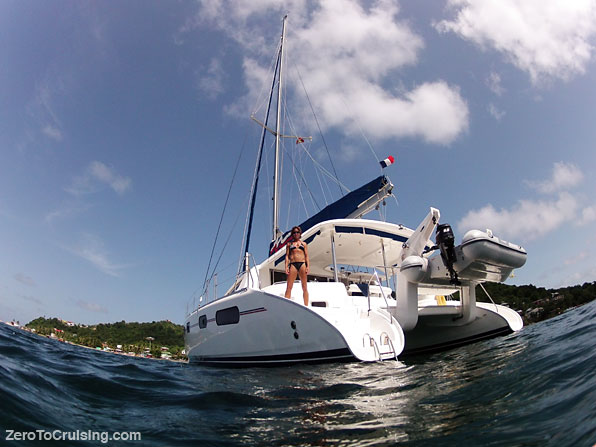
I'm sure at some point or another I've hit upon some of our motivations for wanting to change our lifestyle. The cliche "don't put off until tomorrow what you can do today" is among our motivations. Perhaps the better version of this is a quote attributed to Pablo Picasso "Only put off until tomorrow what you are willing to die having left undone".
You see, while my parents did the 'work for 45+ years and then enjoy your retirement' thing, my father-in-law was not as lucky. Born in a German enclave in the Ukraine, he had early training as a baker before he immigrated to the U.S. with his family late in his teen years. Shortly after arriving here, he was drafted into the Army where he served his new country with pride. He was a blue collar man, working at foundries and finally ending up at Lowrey's Meat Snacks where he was a heavy machine mechanic. He made a reasonable and honest living providing for his family and enjoyed taking road trips to see the sights of his new homeland.
A couple years before retirement, the Lowrey's plant in Denver closed. By that time the years of hard work had taken a toll and he was on disability until he reached the normal retirement age of 65. He was starting to suffer from the early stages of COPD and other health issues. His love of travel became increasingly difficult as time passed. Recently his health had deteriorated to the point that it was difficult for him to get out of his home. Two weeks ago he passed away.
While I know he had a good life, I'm sure he would have liked to travel more, taken a trip to Germany to see family as well as see more of the U.S. But each of us only has a limited amount of time here and we don't know when that time will end. So, to everyone reading this I say don't put off chasing your dreams and to my father-in-law, rest in peace.
Friday, August 16, 2013
Monday, August 5, 2013
What We've Learned Thus Far - Boat Brokers
I wish I had more interesting things to write about right now...like all the tasks of refitting a boat...but alas we are still searching for the right boat. We have a lead on one, but nothing will happen with it until October at the earliest and, until we have one purchased, we will continue to search. In the meantime, I've been slowly working my way through the generous gift of books from my friends at The Retirement Project (btw: really excited for them right now, they are moving their boat to the coast to start their new life).
Some of the books I probably should have read before we started shopping for a boat. The "Cruising Catamaran Communique" was a bit dry but provided some good information on what to look for in a catamaran and how to interpret some of those confusing specification numbers. The book I'm reading now, "The Essentials Of Living Aboard a Boat", chronicles what one guy learned in his first live-aboard boat purchase. His early experiences and thoughts got me thinking about what we've learned thus far in the boat buying process. Then I wondered if it might be fun to periodically touch upon the highlights of what we've learned thus far. So here goes...the first installment...
When we first started looking at boats and were searching all the usual places (like Yachworld and Sailboatlistings), I wrote a post about the pain of trying to shop for a boat from Colorado. Just a few people had found our blog at that point, and one suggested we try to find a buyers broker. Seems like a pretty obvious recommendation, doesn't it...so why hadn't I thought of it? We used a realtor when we bought our first house, so it would seem to make sense to do the same for our first on-the-water home. While we may pay a bit more for a boat to help cover the commission the broker(s) receive compared to a "for sale by owner" sale, what we would hopefully get in return is someone to help us newbies with finding the right boat as well as guiding us through the process. Since we are so far from the ocean, having "boots on the ground" in a market where boats were actually available hopefully would help us pre-qualify options and reduce the number of wasted trips to see boats that wouldn't suit us.
One thing I didn't think would be a problem would be finding a broker. The economy isn't that great, so finding someone who wanted to pocket 5~10% of a $100 to 200 thousand dollar purchase shouldn't be that hard, right? Well, apparently most catamaran brokers must be immune to the effects of the economy as we had a hard time initially finding one. We searched online for broker recommendations and sent out a number of introductory emails, but got few responses. We did receive a response from a broker at the St. Petersburg location of The Catamaran Company when we asked about a specific boat he had for sale. When we asked if he would like to act as our buyers agent, he became unresponsive for a time, blew off a scheduled call with us, and then finally passed us on to another Catamaran Company broker out of St. Augustine. We are glad he did!
Within a day of receiving the email that we were being passed on to a different broker (apparently we weren't worthy of the St. Petersburg broker's time...at least that is the feeling we got), we were contacted by Pete Gulick from the St. Augustine office. We quickly set up a time for a call to "get the ball rolling". He called right on time (a refreshing change) and we discussed what we thought we were looking for. We later set up a trip to see a variety of boats he thought might fit our desires and to help us narrow down our options. Since that time, he has worked tirelessly to find us a boat and filter out the "lemons" so we weren't wasting a lot of time looking at boats that just wouldn't work for us.
While we don't have a boat yet, it has definitely not been for a lack of Pete's trying to find the right boat for us. It is just plain difficult when there were only 50 or so boats of your top model choice that were ever made. In fact, when a "for sale by owner" boat popped up that looked like it might be a really good fit for us, he was the first to suggest that we should pursue it and said he would be happy to help answer questions and provide suggestions. I think he has a good balance of providing help and suggestions to novice buyers without being overbearing or pushy. He seems genuinely interested in getting his customers the right boat for them and not just what gets him the biggest paycheck. A very welcome change from the stereotypical used car salesman type you might expect.
So, What have we learned so far when it comes to boat brokers?
Some of the books I probably should have read before we started shopping for a boat. The "Cruising Catamaran Communique" was a bit dry but provided some good information on what to look for in a catamaran and how to interpret some of those confusing specification numbers. The book I'm reading now, "The Essentials Of Living Aboard a Boat", chronicles what one guy learned in his first live-aboard boat purchase. His early experiences and thoughts got me thinking about what we've learned thus far in the boat buying process. Then I wondered if it might be fun to periodically touch upon the highlights of what we've learned thus far. So here goes...the first installment...
Boat Brokers
When we first started looking at boats and were searching all the usual places (like Yachworld and Sailboatlistings), I wrote a post about the pain of trying to shop for a boat from Colorado. Just a few people had found our blog at that point, and one suggested we try to find a buyers broker. Seems like a pretty obvious recommendation, doesn't it...so why hadn't I thought of it? We used a realtor when we bought our first house, so it would seem to make sense to do the same for our first on-the-water home. While we may pay a bit more for a boat to help cover the commission the broker(s) receive compared to a "for sale by owner" sale, what we would hopefully get in return is someone to help us newbies with finding the right boat as well as guiding us through the process. Since we are so far from the ocean, having "boots on the ground" in a market where boats were actually available hopefully would help us pre-qualify options and reduce the number of wasted trips to see boats that wouldn't suit us.
One thing I didn't think would be a problem would be finding a broker. The economy isn't that great, so finding someone who wanted to pocket 5~10% of a $100 to 200 thousand dollar purchase shouldn't be that hard, right? Well, apparently most catamaran brokers must be immune to the effects of the economy as we had a hard time initially finding one. We searched online for broker recommendations and sent out a number of introductory emails, but got few responses. We did receive a response from a broker at the St. Petersburg location of The Catamaran Company when we asked about a specific boat he had for sale. When we asked if he would like to act as our buyers agent, he became unresponsive for a time, blew off a scheduled call with us, and then finally passed us on to another Catamaran Company broker out of St. Augustine. We are glad he did!
Within a day of receiving the email that we were being passed on to a different broker (apparently we weren't worthy of the St. Petersburg broker's time...at least that is the feeling we got), we were contacted by Pete Gulick from the St. Augustine office. We quickly set up a time for a call to "get the ball rolling". He called right on time (a refreshing change) and we discussed what we thought we were looking for. We later set up a trip to see a variety of boats he thought might fit our desires and to help us narrow down our options. Since that time, he has worked tirelessly to find us a boat and filter out the "lemons" so we weren't wasting a lot of time looking at boats that just wouldn't work for us.
While we don't have a boat yet, it has definitely not been for a lack of Pete's trying to find the right boat for us. It is just plain difficult when there were only 50 or so boats of your top model choice that were ever made. In fact, when a "for sale by owner" boat popped up that looked like it might be a really good fit for us, he was the first to suggest that we should pursue it and said he would be happy to help answer questions and provide suggestions. I think he has a good balance of providing help and suggestions to novice buyers without being overbearing or pushy. He seems genuinely interested in getting his customers the right boat for them and not just what gets him the biggest paycheck. A very welcome change from the stereotypical used car salesman type you might expect.
So, What have we learned so far when it comes to boat brokers?
- While brokers are paid by the seller out of the proceeds of the sale, a buyers broker should have your best interest at heart. Be wary if the broker is only interested in selling you his listings (they get both the buyer's and seller's portion of the commission that way).
- A buyers broker seems to be a very good idea for a novice boat buyer as they should help guide you through the process, paperwork, etc.
- A buyers broker is even more important if you don't live, or plan on spending every weekend, in a location where the types of boats you are looking for are available.
- A broker has access to some resources not available to the public and can provide things like the selling prices of similar boats (what the real estate profession often refers to as "comps"). [updated]
- Finding a good buyers broker can take time and persistence. Don't settle for one that isn't 100% in your corner. For all the bad ones, there are good ones out there.
- Not all brokers for a given company are the same, judge each one on their individual merits.
- So far, Pete Gulick at The Catamaran Company in St. Augustine rocks!
UPDATE: Sadly, I can no longer recommend Pete Gulick (and can't say I could ever actually recommend the Catamaran Company). A number of issues have arisen post sale that cause me to rescind the recommendation. I apologize to anyone that may have taken my recommendation and used their services with less than satisfactory results.
Monday, July 22, 2013
Inspirations and Oversights
Not too long after this notion of sailing away started, I ran across a blog about a couple from Canada with no sailing experience who learned to sail, bought a catamaran, and went cruising down the eastern coast of North America and off through the Caribbean. Since this was our intention, it definitely got my attention. When I first found their blog I went back to their first post and began reading. I continue to follow them today.
I have found them to be an inspiration in our quest to throw off the dock lines of our land-based life and sail along a different path. I could have sworn I had mentioned them in a post or two (other than just my research page), but after a quick review of my past entries, I couldn't find one. So I will correct that oversight now.
Zero To Cruising is exactly as their blog name indicates. Mike and Rebecca went from complete sailing newbies to seasoned cruisers. They are an excellent resource for those interested in cruising as well as those who just want to see what it might be like, both good and bad, to live on a sailboat in the Caribbean.
Why am I bringing this up now? Well, I had always hoped we might eventually run into them in some anchorage in the Caribbean and swap stories over sundowners. I would have never thought that we would end up meeting them before we had a boat and certainly not in Colorado. But that is exactly what happened. This past weekend we got the chance to hang out with them and a few other of their blog readers at an open house.
Wondering why a couple cruising the Caribbean ended up finding their way to Colorado? Well, after about three years of cruising on their PDQ 32, they are embarking on a new adventure as the crew for a Leopard 4600 charter sailboat in the Caribbean. The soon to be owner of that catamaran is right here in Colorado and so Mike and Rebecca are here with the owner making plans and preparing to take possession of the boat.
Having read pretty much every entry on their blog, it seemed that Mike and Rebecca were a pretty cool, down to earth couple. Getting to meet them in person only confirmed that fact. I can definitely see why the owner of the Leopard wants them to be the charter crew for his boat. Between the nice layout of the Leopard and the obvious dedication and very personable nature of Mike and Rebecca, I would imagine that anyone chartering this boat and her crew for a vacation would have an absolutely wonderful time.
We had a great time talking about sailing and plans and other topics with everyone who was there. We were also treated to something that the owner, Mike and Rebecca are intending to do occasionally on their charter...they made ice cream (imagine how great it would be to be on vacation in the Caribbean, sitting on a boat, watching the sun set with some home-made ice cream). The open house was a lot of fun and I'd like to thank Mike, Rebecca, Michael and Julie (the new catamaran owners and hosts) as well as everyone who attended...we had a great time.
UPDATE: The charter boat's web site is now live (still a work in progress as of 7/30/2013). You can find it here: One Love Catamaran Charters
UPDATE 2: I'm not crazy...just forgetful. I did write a post about Zero To Cruising almost a year ago.
I have found them to be an inspiration in our quest to throw off the dock lines of our land-based life and sail along a different path. I could have sworn I had mentioned them in a post or two (other than just my research page), but after a quick review of my past entries, I couldn't find one. So I will correct that oversight now.
Zero To Cruising is exactly as their blog name indicates. Mike and Rebecca went from complete sailing newbies to seasoned cruisers. They are an excellent resource for those interested in cruising as well as those who just want to see what it might be like, both good and bad, to live on a sailboat in the Caribbean.
Why am I bringing this up now? Well, I had always hoped we might eventually run into them in some anchorage in the Caribbean and swap stories over sundowners. I would have never thought that we would end up meeting them before we had a boat and certainly not in Colorado. But that is exactly what happened. This past weekend we got the chance to hang out with them and a few other of their blog readers at an open house.
Wondering why a couple cruising the Caribbean ended up finding their way to Colorado? Well, after about three years of cruising on their PDQ 32, they are embarking on a new adventure as the crew for a Leopard 4600 charter sailboat in the Caribbean. The soon to be owner of that catamaran is right here in Colorado and so Mike and Rebecca are here with the owner making plans and preparing to take possession of the boat.
Having read pretty much every entry on their blog, it seemed that Mike and Rebecca were a pretty cool, down to earth couple. Getting to meet them in person only confirmed that fact. I can definitely see why the owner of the Leopard wants them to be the charter crew for his boat. Between the nice layout of the Leopard and the obvious dedication and very personable nature of Mike and Rebecca, I would imagine that anyone chartering this boat and her crew for a vacation would have an absolutely wonderful time.
We had a great time talking about sailing and plans and other topics with everyone who was there. We were also treated to something that the owner, Mike and Rebecca are intending to do occasionally on their charter...they made ice cream (imagine how great it would be to be on vacation in the Caribbean, sitting on a boat, watching the sun set with some home-made ice cream). The open house was a lot of fun and I'd like to thank Mike, Rebecca, Michael and Julie (the new catamaran owners and hosts) as well as everyone who attended...we had a great time.
UPDATE: The charter boat's web site is now live (still a work in progress as of 7/30/2013). You can find it here: One Love Catamaran Charters
UPDATE 2: I'm not crazy...just forgetful. I did write a post about Zero To Cruising almost a year ago.
Wednesday, July 17, 2013
New Leads From an Unexpected Source
A few weeks ago I finally managed to post a question to the Cruisers Forum asking for any thoughts regarding what we consider our top two choices for "our boat". There were some interesting comments, so if you are interested in the Fountaine Pajot Tobago or Lagoon 37, click the link above and check them out.
It seems that the overall consensus was that either boat would be a good option. Each has pros and cons and it is a very close race in our minds even though the boats are fairly different configurations. In the end I think we really prefer the Lagoon.
One thing that I didn't expect from my post was to be contacted by a couple of people that owned boats and wanted to sell them and both were Lagoons. Now ideally we would like to buy a boat that is in the US as it makes the logistics much easier, but both were in the Caribbean. Since we are not finding one in the US, I guess we do need to "broaden our horizon".
I had seen the first boat listed on a for sale by owner web site. I contacted the owner by email and they sent me a couple links to more pictures of the boat. None of the pictures were high detail and it was unclear when they were taken, so while the boat seemed it could fit the bill, I could not really assess the condition. Given the advertised price, I assumed the boat would require some work and was curious what it was. So, I sent another email and asked the owner if they could provide more details about the boat including their assessment of it's condition so neither of us would waste traveling to see it just to find out it wasn't the level of project I was comfortable with. Unfortunately, instead of getting responses to my questions, the owner decided it was unlikely the boat would work for me. Oh well, I guess if he changes his mind we could pick up the conversation where we left off.
The owner of the second boat left his phone number, so I gave him a call. We had a nice conversation about his Lagoon and got the impression that this boat was in very good (or to use the proper sailing term "Bristol") condition. He sent me a number of pictures including some higher resolution ones that support my impression of it's condition. Of course, this does come at a price. It is the highest price of any Lagoon I've seen by a pretty fair margin but may well be worth it. I don't really want to say much more about this boat at this time...but hopefully we are coming one step closer to our new home on the water.
If you've been following for long, you may recall that I was working with a broker. When I told him about the second boat, he said "go for it" knowing that he may be out a commission because he knows how difficult it has been finding a good Lagoon. How's that for integrity. I'm trying to figure if there is a way to keep him in the deal where I would pay his fee without breaking the bank. I really need to write another post about our broker as he has been great to work with. But for now if you happen to be looking for a decent and honest boat broker that will help you with any size of catamaran purchase, you might want to give Pete Gulick at the Catamaran Company a call.
Update: Unfortunately I can no longer recommend Pete (and never really could recommend the Catamaran Company and its affiliates).
It seems that the overall consensus was that either boat would be a good option. Each has pros and cons and it is a very close race in our minds even though the boats are fairly different configurations. In the end I think we really prefer the Lagoon.
One thing that I didn't expect from my post was to be contacted by a couple of people that owned boats and wanted to sell them and both were Lagoons. Now ideally we would like to buy a boat that is in the US as it makes the logistics much easier, but both were in the Caribbean. Since we are not finding one in the US, I guess we do need to "broaden our horizon".
I had seen the first boat listed on a for sale by owner web site. I contacted the owner by email and they sent me a couple links to more pictures of the boat. None of the pictures were high detail and it was unclear when they were taken, so while the boat seemed it could fit the bill, I could not really assess the condition. Given the advertised price, I assumed the boat would require some work and was curious what it was. So, I sent another email and asked the owner if they could provide more details about the boat including their assessment of it's condition so neither of us would waste traveling to see it just to find out it wasn't the level of project I was comfortable with. Unfortunately, instead of getting responses to my questions, the owner decided it was unlikely the boat would work for me. Oh well, I guess if he changes his mind we could pick up the conversation where we left off.
The owner of the second boat left his phone number, so I gave him a call. We had a nice conversation about his Lagoon and got the impression that this boat was in very good (or to use the proper sailing term "Bristol") condition. He sent me a number of pictures including some higher resolution ones that support my impression of it's condition. Of course, this does come at a price. It is the highest price of any Lagoon I've seen by a pretty fair margin but may well be worth it. I don't really want to say much more about this boat at this time...but hopefully we are coming one step closer to our new home on the water.
If you've been following for long, you may recall that I was working with a broker. When I told him about the second boat, he said "go for it" knowing that he may be out a commission because he knows how difficult it has been finding a good Lagoon. How's that for integrity. I'm trying to figure if there is a way to keep him in the deal where I would pay his fee without breaking the bank. I really need to write another post about our broker as he has been great to work with. But for now if you happen to be looking for a decent and honest boat broker that will help you with any size of catamaran purchase, you might want to give Pete Gulick at the Catamaran Company a call.
Update: Unfortunately I can no longer recommend Pete (and never really could recommend the Catamaran Company and its affiliates).
Thursday, July 4, 2013
Teaching a Not So Old Dog a New Trick
I previously wrote about our dogs' first swimming lesson. As I had mentioned, our younger dog is very timid and for the first lesson it was all we could do to get him to walk down the pool ramp far enough to get his paws wet. We had been thinking about this issue. One of the problems with the "public dog pool" is that it is for employees and dogs only. We couldn't be in the pool to help coax him in. Another problem is that we couldn't bring treats into the pool area so that wouldn't be any help (not that he was as food motivated as our other dog anyway). We figured at the apparent rate of progress, his learning to swim may cost us a fortune.
Well, while at a local discount store, we found an 8 foot round by 30 inch deep Easy Set pool (a.k.a. big blue blob) on sale for $35. Hmmm...the cost of getting one of these and filling it would be about the same cost as a single half hour swimming lesson. That might be worth giving a try to reduce the time and cost of introducing our timid dog to the water. It's not really enough to swim laps in, even for a 40 lb. dog, but it should at least allow us to introduce him to the water and swimming at his own pace. So, while I would prefer to be getting rid of things at this stage, we bought one.
Since the dogs will need life jackets on the boat, we picked up those as well. An internet/sailing/blogging friend on s/v Smitty recommended the Outward Hound jacket. The design appears to have changed from the one pictured, and we found the newer style was exactly the same as the one sold at our local Petsmart so we picked them up there (and they were even on sale, yay).
We set the pool up on a tarp on our patio as it was the only reasonably flat space that wouldn't kill grass. The blue blob is, as the name suggests, easy to set up. You lay it out, blow up the inflatable ring around the top, and fill with water. The result is a pool big enough to float a medium sized dog. We then put the vest on our older dog and used it to lift her into the pool with one of us outside the pool and one in the pool. The new dual handle design of the vest is handy for lifting a 40 lb. dog...at least into a pool. When our older dog touches the water, she immediately begins trying to swim. I don't think she likes water...or at least the pool...but she definitely can swim. We wanted her to go first so our more timid dog would see and maybe think it isn't that scary...yeah, trying to play psychological games with our dogs.
We then put the vest on our timid dog and brought him over to the pool. We slowly put him in the water with my wife in the pool. Lots of praise, but he just floats there as we hold on to the handle of the jacket. And when he starts to tremble a bit, we take him out. That's enough for the first day. In the following days our timid dog and the pool meet several more times and each time he becomes more comfortable with the life jacket and the pool. The last time he was in the pool my wife was able to take him to one side and I would call him and he would swim the 6 or so feet over to me unassisted. He doesn't really seem much more comfortable than our other dog, but is definitely making good progress. Thus far the pool seems to be to be a success.
One thing we have noticed is that the life vests don't provide as much buoyancy as I thought they might. Specifically, they don't seem to hold the dogs head as high as I would have thought they would with the extra flap of foam up front. They do seem to keep them afloat and maybe we're just being nervous parents. The pool is fresh water, and salt water is more buoyant, so I'm sure they will work out just fine.
The other thing to note about this experiment is that even these small pools require constant maintenance if you intend to keep them filled for more than a day or two. The pool holds 640 gallons of water, so we don't want to keep refilling this thing. And this pool doesn't have a pump, much less chemical systems to help out. We only intend to have it filled for two or three weeks, so we buy the less accurate test strips to test the basic chemical balance. For chemicals, instead of buying pool specific chemicals, you can use a few household chemicals such as bottled bleach and borax. To figure out what you need to do, there is a handy online pool calculator where you enter in your test info and it will tell you how much of what chemicals to add to keep your pool safe.
Thus far, the pool is working out well. We will likely empty the pool this upcoming weekend and take the dogs back to the public pool for more of a real swim. Based on all the information I've been able to find, the treated water should be fine for the lawn, so it will serve one last purpose watering our lawn. Hopefully our dogs, and particularly our timid one, will find the pool a more comfortable experience on their next visit. Who knows, maybe soon our dogs will be as comfortable in the water as some dogs another internet friend has mentioned in their recent post.
Well, while at a local discount store, we found an 8 foot round by 30 inch deep Easy Set pool (a.k.a. big blue blob) on sale for $35. Hmmm...the cost of getting one of these and filling it would be about the same cost as a single half hour swimming lesson. That might be worth giving a try to reduce the time and cost of introducing our timid dog to the water. It's not really enough to swim laps in, even for a 40 lb. dog, but it should at least allow us to introduce him to the water and swimming at his own pace. So, while I would prefer to be getting rid of things at this stage, we bought one.
![]() |
| Dog Training Pool - A.K.A. The Big Blue Blob |
Since the dogs will need life jackets on the boat, we picked up those as well. An internet/sailing/blogging friend on s/v Smitty recommended the Outward Hound jacket. The design appears to have changed from the one pictured, and we found the newer style was exactly the same as the one sold at our local Petsmart so we picked them up there (and they were even on sale, yay).
We set the pool up on a tarp on our patio as it was the only reasonably flat space that wouldn't kill grass. The blue blob is, as the name suggests, easy to set up. You lay it out, blow up the inflatable ring around the top, and fill with water. The result is a pool big enough to float a medium sized dog. We then put the vest on our older dog and used it to lift her into the pool with one of us outside the pool and one in the pool. The new dual handle design of the vest is handy for lifting a 40 lb. dog...at least into a pool. When our older dog touches the water, she immediately begins trying to swim. I don't think she likes water...or at least the pool...but she definitely can swim. We wanted her to go first so our more timid dog would see and maybe think it isn't that scary...yeah, trying to play psychological games with our dogs.
We then put the vest on our timid dog and brought him over to the pool. We slowly put him in the water with my wife in the pool. Lots of praise, but he just floats there as we hold on to the handle of the jacket. And when he starts to tremble a bit, we take him out. That's enough for the first day. In the following days our timid dog and the pool meet several more times and each time he becomes more comfortable with the life jacket and the pool. The last time he was in the pool my wife was able to take him to one side and I would call him and he would swim the 6 or so feet over to me unassisted. He doesn't really seem much more comfortable than our other dog, but is definitely making good progress. Thus far the pool seems to be to be a success.
|
|
One thing we have noticed is that the life vests don't provide as much buoyancy as I thought they might. Specifically, they don't seem to hold the dogs head as high as I would have thought they would with the extra flap of foam up front. They do seem to keep them afloat and maybe we're just being nervous parents. The pool is fresh water, and salt water is more buoyant, so I'm sure they will work out just fine.
The other thing to note about this experiment is that even these small pools require constant maintenance if you intend to keep them filled for more than a day or two. The pool holds 640 gallons of water, so we don't want to keep refilling this thing. And this pool doesn't have a pump, much less chemical systems to help out. We only intend to have it filled for two or three weeks, so we buy the less accurate test strips to test the basic chemical balance. For chemicals, instead of buying pool specific chemicals, you can use a few household chemicals such as bottled bleach and borax. To figure out what you need to do, there is a handy online pool calculator where you enter in your test info and it will tell you how much of what chemicals to add to keep your pool safe.
Thus far, the pool is working out well. We will likely empty the pool this upcoming weekend and take the dogs back to the public pool for more of a real swim. Based on all the information I've been able to find, the treated water should be fine for the lawn, so it will serve one last purpose watering our lawn. Hopefully our dogs, and particularly our timid one, will find the pool a more comfortable experience on their next visit. Who knows, maybe soon our dogs will be as comfortable in the water as some dogs another internet friend has mentioned in their recent post.
Sunday, June 30, 2013
A Little Progress
Feeling much better after the little medical issue (well, except for the whole health insurance thing and what "The Affordable Healthcare Act" may or may not mean...still need to research that). We are pushing along on a couple fronts, but progress has been limited.
Having done a fair amount of looking at various boats, we definitely like the Lagoon 37 and the Tobago 35. We think we would prefer the Lagoon 37 as it is just a bit larger and has better storage options, particularly in the galley. Unfortunately, there are very few of them on the market right now. We do have a couple leads we are pursuing so hopefully there will be some good news to report in the near future.
Realizing that we haven't sailed a boat in over 6 months, we did manage to remedy that this weekend. We rented one of our Colorado sailing school's J/22 boats (the same boats we used during the ASA 101 and 103 courses) for a half day to help knock the rust off of our basic sailing skills. No, it's not a catamaran and is far smaller than anything we can live aboard, but it is the right size for the reservoirs around here.
It took us a bit longer to get the boat setup than it did the last time we were on one, but things came back to us fairly quickly. Can't say the winds were any better than in the past, over the course of 4 hours we saw everything from 0 to 20 knots from numerous directions. It is probably a good thing that it started out on the calmer side. We were able to practice a number of the basic maneuvers. After the winds picked up and seemed to be sticking around, we decided to tuck a reef in the main. Knock a little more dust off of old memories and we got the reef in...so of course the wind dies down about a minute later...and we get to practice shaking out the reef.
We get back to the dock, get fenders deployed and dock lines set and docking the boat went off without a hitch. Almost looked like we knew what we were doing...almost. I'm sure no one noticed that I probably should have started with the stern dock line instead of the bow one (they like us to enter the slip bow first). But no fiberglass was chipped or paint was scratched and only the fenders touched the dock so it went well. Overall, other than a few glitches that were to be expected, we met our goal and had some fun in the process.
Now if we can only find "our" boat.
Having done a fair amount of looking at various boats, we definitely like the Lagoon 37 and the Tobago 35. We think we would prefer the Lagoon 37 as it is just a bit larger and has better storage options, particularly in the galley. Unfortunately, there are very few of them on the market right now. We do have a couple leads we are pursuing so hopefully there will be some good news to report in the near future.
Realizing that we haven't sailed a boat in over 6 months, we did manage to remedy that this weekend. We rented one of our Colorado sailing school's J/22 boats (the same boats we used during the ASA 101 and 103 courses) for a half day to help knock the rust off of our basic sailing skills. No, it's not a catamaran and is far smaller than anything we can live aboard, but it is the right size for the reservoirs around here.
It took us a bit longer to get the boat setup than it did the last time we were on one, but things came back to us fairly quickly. Can't say the winds were any better than in the past, over the course of 4 hours we saw everything from 0 to 20 knots from numerous directions. It is probably a good thing that it started out on the calmer side. We were able to practice a number of the basic maneuvers. After the winds picked up and seemed to be sticking around, we decided to tuck a reef in the main. Knock a little more dust off of old memories and we got the reef in...so of course the wind dies down about a minute later...and we get to practice shaking out the reef.
We get back to the dock, get fenders deployed and dock lines set and docking the boat went off without a hitch. Almost looked like we knew what we were doing...almost. I'm sure no one noticed that I probably should have started with the stern dock line instead of the bow one (they like us to enter the slip bow first). But no fiberglass was chipped or paint was scratched and only the fenders touched the dock so it went well. Overall, other than a few glitches that were to be expected, we met our goal and had some fun in the process.
Now if we can only find "our" boat.
Sunday, June 16, 2013
Health Insurance
What is it they say about the best made plans? Well, in the middle of my search for a boat, life has thrown me a little curve ball. A few days ago I had to go in for a minor outpatient surgery. I'm at home recovering now and everything should be OK, but it has put my search on hold for just a little bit.
This got me thinking about healthcare again. Of course right now I, like many working stiffs in the U.S., have health insurance provided by my employer. Over the past years the portion of this insurance that the employee pays for has gone up considerably while the coverage seems to have gone down. While I haven't received the final bill, between all the deductibles and copayments and multiple billings. I expect I will owe several thousand dollars...for this outpatient procedure.
I'm pretty sure that for the cost I'll end up paying myself, I probably could have flown to one of a number of places where healthcare is both decent and affordable. If I had been able to think straight at the time, I should have looked into this. Maybe I could have been recuperating in some tropical locale where I could look at some boats instead of sitting at home. Oh well.
In the U.S. we always hear that we have the best healthcare in the world. (We should tout that we have the best propaganda and advertising in the world). While I'm sure we have some very cutting edge research and procedures that can better save lives here, I think the truth is that for most of the average working stiffs in the U.S. our medical care is determined mostly by an insurance company that works as a for-profit business. Their primary concern is to make a profit for their shareholders and their secondary concern is selling their insurance to the companies we work for as a reasonably cost-effective "benefit". The end result is that I doubt most of us actually have direct access to the "best" due to the prohibitive cost and lack of coverage by our insurance providers. When pitting my well-being against the profit of a corporation, I don't think I'll be betting on my well-being as the insurance company's primary motivating factor. So, this leaves most of us with more "average" healthcare.
I have a friend whose father retired to Mexico a number of years ago. As with most traditional retirement-aged folks, they have had somewhat regular experience with the medical care there. The father is happy with the healthcare he has received and finds that the quality of care is very similar to that found in the U.S., with many of the doctors and specialists actually U.S. trained. The difference is that the cost is significantly less, on the order of 25% to 33% of what comparable care costs in the U.S. By the time I calculate what I've paid in insurance premiums and what I'll pay in deductibles, co-payments, and co-insurance (a fancy term for a percentage that you will have to pay out-of-pocket anyway), I'm pretty sure I'll have paid for more than 33% of my U.S. priced medical care this year.
The only thing that the insurance companies seem to really do for us is to negotiate somewhat more reasonable rates with medical providers (you know, when the doctor charges you $100 for something, the insurance says they apply a "discount" and the charge is reduced to $10). Ironically, this isn't that different from the cost controls used in many of the public healthcare systems in the rest of the world.
When I was doing research on this subject a while ago, I ran across an insurance company that would provide international health insurance. I don't recall the exact figures but from what I could remember at the time, I could get insurance for my wife and me that would cover us everywhere except the U.S. and it seemed fairly reasonable. If we wanted to add coverage in the U.S., the cost of coverage was multiplied by a factor of about 8. So, apparently the U.S. does have the most expensive healthcare in the world.
It seems in most cases we plan to be in places that will have decent healthcare at reasonable prices. So, do we simply "self insure" (a.k.a. pay our own way)? Buy a policy with a high deductible that would cover more catastrophic issues? Should we consider some sort of evacuation plan (can fly you to somewhere with better medical care if you are not near facilities that can help)? Lots of questions to be answered. Depending on the cost, I think we will likely do some catastrophic/self insure combination. If we do include an evacuation plan, would we evacuate from the U.S. to find reasonable healthcare. Hmmm...
Here are a couple links for health insurance for cruisers/travelers:
Health Care International
International Medical Group
Diver Alert Network (DAN) - Scuba-oriented, but covers other issues as well.
This got me thinking about healthcare again. Of course right now I, like many working stiffs in the U.S., have health insurance provided by my employer. Over the past years the portion of this insurance that the employee pays for has gone up considerably while the coverage seems to have gone down. While I haven't received the final bill, between all the deductibles and copayments and multiple billings. I expect I will owe several thousand dollars...for this outpatient procedure.
I'm pretty sure that for the cost I'll end up paying myself, I probably could have flown to one of a number of places where healthcare is both decent and affordable. If I had been able to think straight at the time, I should have looked into this. Maybe I could have been recuperating in some tropical locale where I could look at some boats instead of sitting at home. Oh well.
![]() |
| General Hospital in St George's, Grenada |
I have a friend whose father retired to Mexico a number of years ago. As with most traditional retirement-aged folks, they have had somewhat regular experience with the medical care there. The father is happy with the healthcare he has received and finds that the quality of care is very similar to that found in the U.S., with many of the doctors and specialists actually U.S. trained. The difference is that the cost is significantly less, on the order of 25% to 33% of what comparable care costs in the U.S. By the time I calculate what I've paid in insurance premiums and what I'll pay in deductibles, co-payments, and co-insurance (a fancy term for a percentage that you will have to pay out-of-pocket anyway), I'm pretty sure I'll have paid for more than 33% of my U.S. priced medical care this year.
The only thing that the insurance companies seem to really do for us is to negotiate somewhat more reasonable rates with medical providers (you know, when the doctor charges you $100 for something, the insurance says they apply a "discount" and the charge is reduced to $10). Ironically, this isn't that different from the cost controls used in many of the public healthcare systems in the rest of the world.
When I was doing research on this subject a while ago, I ran across an insurance company that would provide international health insurance. I don't recall the exact figures but from what I could remember at the time, I could get insurance for my wife and me that would cover us everywhere except the U.S. and it seemed fairly reasonable. If we wanted to add coverage in the U.S., the cost of coverage was multiplied by a factor of about 8. So, apparently the U.S. does have the most expensive healthcare in the world.
It seems in most cases we plan to be in places that will have decent healthcare at reasonable prices. So, do we simply "self insure" (a.k.a. pay our own way)? Buy a policy with a high deductible that would cover more catastrophic issues? Should we consider some sort of evacuation plan (can fly you to somewhere with better medical care if you are not near facilities that can help)? Lots of questions to be answered. Depending on the cost, I think we will likely do some catastrophic/self insure combination. If we do include an evacuation plan, would we evacuate from the U.S. to find reasonable healthcare. Hmmm...
Here are a couple links for health insurance for cruisers/travelers:
Health Care International
International Medical Group
Diver Alert Network (DAN) - Scuba-oriented, but covers other issues as well.
Subscribe to:
Posts (Atom)